

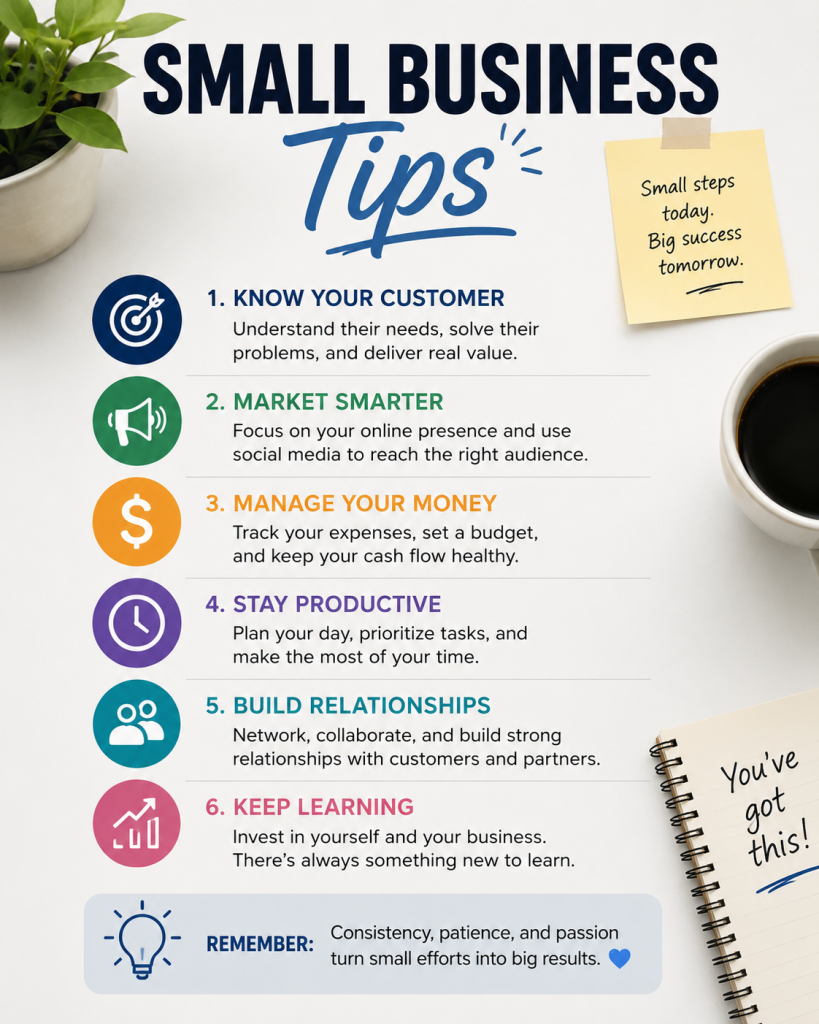
Learn how to launch your small business with zero startup capital. This guide covers free tools, no-cost marketing, and real strategies to get your business off the ground in 2026 without breaking the bank.
The Uncomfortable Truth About Starting with Zero Dollars
I remember sitting at my kitchen table with $47 in my bank account, staring at a spreadsheet that showed I needed $5,000 to launch my business. My heart sank. I thought my dream was over before it started.
But here’s what I discovered: the idea that you need money to start a business is mostly a myth. Some of the most successful companies today—Airbnb, Dropshipping stores, freelance agencies, digital products—were started with little to nothing.
The barrier to entry has completely disappeared in 2026. You don’t need a physical store, an office lease, or expensive equipment. What you need is creativity, hustle, and knowledge of where to find free resources.
If you’re sitting where I was—broke but determined—this guide is for you. I’m going to show you exactly how to start a legitimate small business without spending a dime on startup costs.
What Does It Actually Mean to Start a Business “With No Money”?
Before we dive in, let’s be clear about what we’re talking about. Starting with “no money” doesn’t mean zero expenses forever. It means:
- $0 startup investment (or under $50)
- Using free tools instead of paid software
- Validating your business idea before investing
- Bootstrapping revenue to fund growth
- Trading time for money in the beginning
It does NOT mean:
- You’ll never make money
- You won’t need internet access
- You can skip basic business registration
- Quality doesn’t matter
The key is launching fast, testing whether people actually want what you’re selling, and then reinvesting the first few dollars of revenue into growth.
The 5-Step Framework to Start a Business With No Money
Step 1: Choose a Business Model That Requires Zero Inventory
The biggest mistake people make is trying to start a product-based business with no money. You can’t manufacturer or stock products if you have no capital.
Instead, focus on service-based or digital businesses:
Best No-Money Business Ideas:
Services (Sell Your Skills)
- Freelance writing, graphic design, video editing
- Social media management for local businesses
- Virtual assistant services
- Tutoring or online coaching
- Social media content creation
Why? You own the inventory (your skills). Zero overhead.
Digital Products
- Online courses teaching what you know
- E-books or guides
- Templates (Canva designs, spreadsheet templates, Notion templates)
- Digital downloads (stock photos, music, code)
Why? One-time creation, unlimited sales. No printing costs.
Service + Digital Hybrid
- Freelance consulting + digital course
- Coaching + template bundles
- Coaching + group program
Why? Combines recurring revenue with one-time digital sales.
Dropshipping (Technically Free)
- Create a Shopify store (14-day free trial)
- List products from suppliers
- Only pay supplier when you make a sale
Why? You don’t buy inventory upfront.
⚠️ Avoid these with no money:
- Physical products you have to manufacture
- Service businesses requiring office space
- Anything that needs initial inventory
Step 2: Validate Your Idea Before You Invest
This is the most important step people skip. They assume people want what they’re selling, spend money, and crash.
Free Validation Tactics:
1. Talk to 10 Potential Customers
- Post in relevant Facebook groups asking “Would you pay for X?”
- Ask friends and family directly
- Comment on Reddit threads in your niche
- DM people on Instagram who fit your target customer
2. Pre-Sell Before You Create
- Create a simple landing page (Carrd.co has free plan)
- Ask people to sign up or express interest
- If 10+ people genuinely want it, move forward
3. Create a Simple Prototype
- Design mockup of your course (no videos yet)
- Write outline of your book (no full writing)
- Create sample of your service (do first project cheap/free)
4. Search Volume Check
- Go to Google and search your keywords
- If nobody’s searching for it, nobody needs it
- Use Google Trends (free) to see if demand is growing
Real example: I wanted to create a “small business SEO course.” Before spending 20 hours creating it, I asked in 5 business Facebook groups, “Would you pay $97 for a small business SEO course?” Exactly 2 people said yes. I moved to a different idea instead of wasting time.
Step 3: Set Up Your Business Infrastructure (Mostly Free)
You don’t need fancy business setup to start. You need just enough to be legitimate and organized.
Free Business Essentials:
Website/Online Home Base
- Carrd.co (free plan available)
- Wix (free plan available)
- WordPress.com (free plan available)
- Google Sites (completely free)
Pick ONE and spend 1 hour setting it up. Just need:
- Your name/business name
- What you do
- How to contact you
Email Address
- Gmail is fine ($0)
- Custom domain email: Forward your domain emails to Gmail free with Namecheap, GoDaddy
Business Registration (varies by location, often $0-$50)
- Check your local government website
- Many places let you do sole proprietorship with zero registration fees
- LLC registration typically $50-$200 (not required to start)
Banking
- Free business account: Chase, Bank of America, Wells Fargo offer free checking
- Separate personal and business money (crucial for taxes)
Business Name
- Check availability on GoDaddy free WHOIS search
- Make sure it’s not trademarked (USPTO.gov search, free)
- You don’t need to trademark it immediately
Step 4: Get Free Tools for Your Specific Business
Depending on your business type, here are the free tools you need:
For Freelance Services (Writer, Designer, VA, Coach):
- Portfolio: Carrd.co, Notion (free), or simple website
- Invoicing: Wave (completely free invoicing + accounting)
- Time tracking: Toggl Track (free plan)
- Communication: Gmail, Zoom (free 40-min calls)
- Document sharing: Google Drive (free)
- Project management: Trello, Asana (free plans)
For Digital Products (Courses, Templates, E-books):
- Website: Carrd.co, Gumroad (free plan)
- Payment processing: Gumroad, Stripe (only pay commission on sales)
- Email list: MailerLite, Brevo (free up to 500 subscribers)
- Design: Canva (free plan), Figma (free plan)
- Video recording: OBS Studio (free), CapCut (free)
For E-Commerce (Dropshipping, Digital Products):
- Store: Shopify (14-day free trial), then look for $5-month plans
- Design: Canva (free plan)
- Email: MailerLite (free)
- Social scheduling: Buffer (free plan), Later (free plan)
Universal Free Tools:
- Google Sheets (accounting, planning, tracking)
- Google Calendar (scheduling)
- Calendly (free plan, for bookings)
- Zoom (free for up to 100 people)
- Slack (free plan, though limited)
- Grammarly (free version of writing tool)
Step 5: Get Your First Customers Without Spending on Ads
This is where most new businesses fail. They think they need Facebook ads or Google ads to get customers. They don’t—not yet.
Free Customer Acquisition Tactics:
1. Direct Outreach (The Fastest)
- Find 10 people who need what you’re selling
- Send them a personal message (not generic)
- Offer a free mini-project or consultation
- Example: “Hi Sarah, I noticed you’re a small business owner. I help coaches get more social media followers. Want to chat about your biggest challenge?”
Result: 30% response rate typically. 1-2 customers per 10 outreach attempts.
2. Facebook/LinkedIn Groups (Where Your Customers Hang Out)
- Join groups where your target customer is active
- Answer questions (don’t sell, just help)
- Post valuable content and mention your service
- Help 10 people. 2-3 will ask to hire you.
3. Local Networking (Still Powerful)
- Chamber of Commerce meetings (often free)
- Small business meetups
- Industry conferences (many have free passes)
- Literally ask 20 people, “Want to grab coffee? I’d love your advice”
4. Content Marketing (Takes Time, But Works)
- Write blog posts on your website
- Post helpful tips on LinkedIn/Twitter
- Create YouTube videos answering common questions
- This positions you as an expert (takes 3-6 months to see results)
5. Partnerships & Referrals
- Team up with someone serving the same audience
- “I’ll send you my customers who need X, if you send me your customers who need Y”
- Offer referral bonuses (even small ones work)
6. Email Outreach (Personal, Not Bulk)
- Find 5 blogs in your niche
- Email the owner: “Hi John, I loved your article on X. I have a resource that adds value. Can I send it to you?”
- Ask for feature/mention
- Result: 10 emails = 2-3 collaborations = new audience
What NOT to do:
- ❌ Post “I’m open for business!” and hope people find you
- ❌ Blast ads on social media (wastes money)
- ❌ Cold email 500 people (gets spam-flagged)
- ❌ Wait for people to come to you
Real example: I got my first 5 freelance writing clients by literally emailing 10 people I knew and asking, “Do you know anyone who needs a writer?” Two referred me. I pitched the other 8 myself.
Common Mistakes Beginners Make Starting With No Money
Mistake 1: Trying Too Many Business Models at Once
You see digital products AND dropshipping AND freelancing all being marketed. You try all three.
Result: Zero momentum. You’re spreading yourself thin.
Fix: Pick ONE business model. Master it. Then expand.
If you pick “freelance writing,” focus 100% on getting writing clients for 90 days. Once you have recurring income, then explore creating a course.
Mistake 2: Not Setting Up Basic Systems
You’re keeping invoices in a folder. Your emails are disorganized. You don’t know how much you’re spending.
Result: You lose money, miss payments, look unprofessional.
Fix: Spend 2 hours setting up:
- Simple spreadsheet for income/expenses
- Email folder system
- Client tracker (Google Sheet)
- Invoice template (Google Docs)
Mistake 3: Underpricing Because You Have No Money
You think, “I’ll charge $10/hour to get clients fast.”
Result: You work 100 hours for $1,000. You’re not building a business; you’re creating a job.
Fix: Price based on value, not desperation. Even starting out:
- Freelance writing: $50-150/article (not per hour)
- Virtual assistant: $25-50/hour minimum
- Coaching: $100-300/session
- Digital products: $27-97 starting price
Plenty of people will pay it, especially if you’ve validated demand.
Mistake 4: Spending Money on Things You Don’t Need
You buy a $300 laptop, expensive software, business cards, a logo, coaching courses.
Result: You spent $1,000 and haven’t made $1 yet.
Fix: Only spend money on things that make you money.
- Don’t: Domain name (use free website first)
- Don’t: Professional logo (Canva free is fine)
- Don’t: Business cards (you won’t give them out)
- Don’t: Courses/coaching (there’s free content)
Do: Spend on things that directly generate revenue:
- Tool to deliver your service? Yes.
- Way to accept payments? Yes.
- Paid ads to find customers? Only after you validate demand.
Real Numbers: What Getting Customers Actually Costs
Here’s what my first year looked like starting with $0:
Month 1-2: $0 spent, $0 revenue
- Set up website (free)
- Reached out to 20 people personally
- Got 1 small paying client
Month 3-4: $12 spent (domain name), $800 revenue
- Wrote helpful content
- Got referred 3 new clients
- Reinvested $50 into email marketing tool
Month 5-6: $65 spent total, $2,100 revenue
- Paid for better website
- Got more referrals
- Launched small digital product
Month 7-12: $200 spent, $8,500 revenue
- Started small paid ads ($100)
- Hired contractor to help ($400)
- Built email list to 500 people
Total first year: $277 investment, $11,400 revenue ROI: 4,000%
Most importantly: I made money BEFORE spending money. Every dollar I invested came from revenue.
Your First 30 Days Action Plan
Week 1: Validate & Set Up
- Pick your business idea
- Ask 10 people if they’d pay for it
- Create free website (1 hour on Carrd.co)
- Set up free email address
Week 2: Get Tools & Systems
- Sign up for free tools you need (Wave, Trello, Canva)
- Create invoice template
- Set up simple income/expense tracking
Week 3: Find Your First Customer
- List 20 people who might need your service
- Reach out personally to 5-10 of them
- Offer to do a small project (cheap or free) to get testimonial
Week 4: Deliver & Get Paid
- Complete your first project
- Ask for payment + testimonial
- Ask them to refer 2 people
- Reinvest any revenue into growth
Frequently Asked Questions
Do I need an LLC to start?
Not immediately. You can start as a sole proprietor with zero registration in many places. Once you make $5,000+/year, consider forming an LLC for tax benefits ($50-200 one-time). Not required to start.
How do I know if my business idea is viable with no money?
Ask 10 potential customers directly. If 3+ say “Yes, I’d pay for that,” move forward. If fewer than 3 say yes, pick a different idea.
What’s the fastest business to start with $0?
Freelancing your existing skills (writing, design, social media, coaching). You can get your first client in weeks.
Can I really make money dropshipping with $0?
Technically yes with a free Shopify trial, but you’ll need to spend money on inventory or ads after the trial ends. Not truly zero-cost long-term.
How long until I make my first dollar?
If you’re doing direct outreach and offering services: 2-4 weeks. If you’re creating digital products: 2-3 months. If you’re doing content marketing: 3-6 months.
Should I spend money on a business course when starting?
No. Not at first. There’s free content on YouTube, blogs, and podcasts. Once you make $2,000+, then consider investing in courses if you want accelerated learning.
Final Thoughts: You Don’t Need Money to Start, But You Need Courage
The biggest barrier to starting a business with no money isn’t money—it’s fear.
Fear that people won’t want what you’re selling. Fear that you’re not good enough. Fear that you’ll fail.
But here’s the truth: Starting with no money forces you to do things right.
You can’t waste money on fancy branding that doesn’t convert. You can’t spend thousands on ads to the wrong audience. You have to talk to real customers, understand what they actually want, and solve real problems.
That’s how you build a business that lasts.
So open that browser. Sign up for that free Carrd account. Write that first email to a potential customer.
You don’t need money to start.
You just need to start.
Next Steps
✅ Ready to get serious? Pick your business idea and validate it this week. Ask 10 people if they’d pay for it.
✅ Need help choosing a business idea? Read our guide: Best Small Business Ideas for Beginners 2026
✅ Already have customers but need to scale? Check out: Best Free Tools for Small Business Marketing
What business are you thinking about starting? Drop a comment below. I reply to every one.SEO · Strategy · 2026Digital Marketing Roadmap for Beginners: The Real Guide Nobody Tells You (2025)SEO · Strategy · 2026Digital Marketing Roadmap for Beginners: The Real Guide Nobody Tells You (2025)SEO · Strategy · 2026